Balochistan 'Declares Independence' From Pakistan: What It Means For China's $60-Billion CPEC Project
Balochistan 'Declares Independence' From Pakistan: What It Means For China's $60-Billion CPEC Project Published By, Last Updated: July 18, 2026, 15:37 IST The $65-billion China-Pakistan
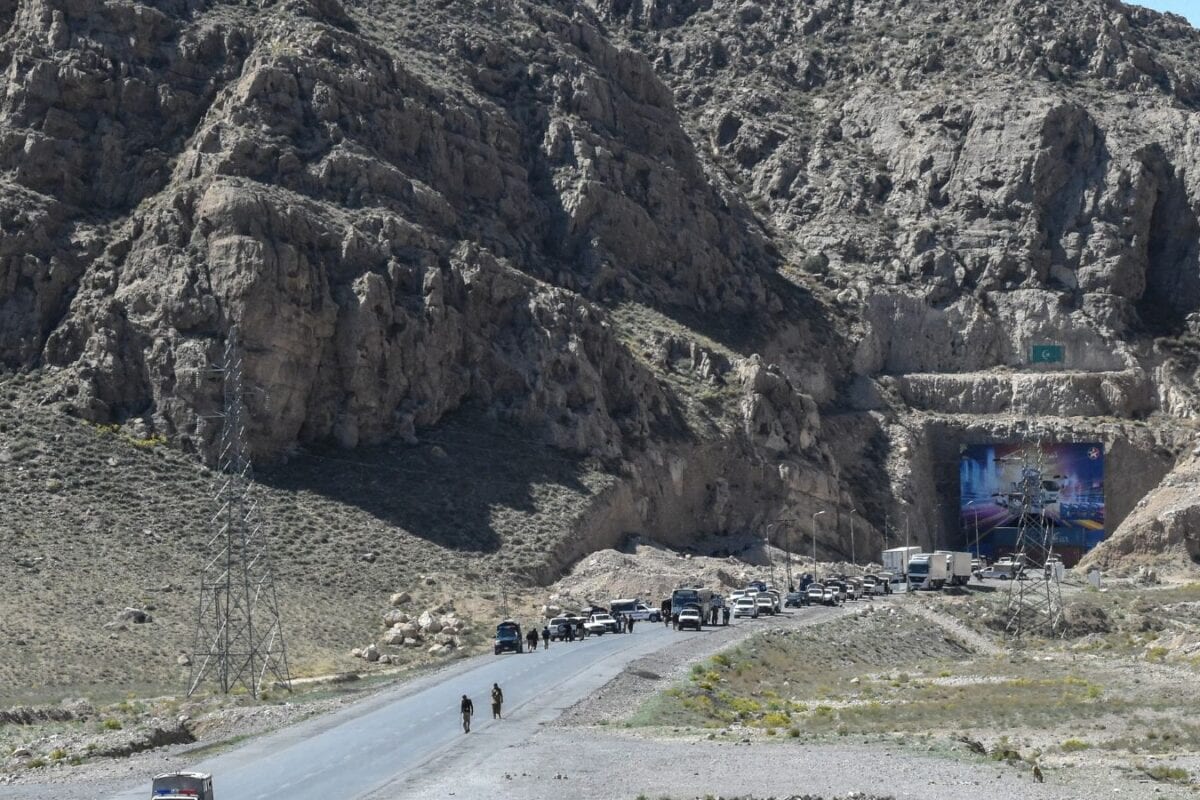
Balochistan 'Declares Independence' From Pakistan: What It Means For China's $60-Billion CPEC Project Published By, Last Updated: July 18, 2026, 15:37 IST The $65-billion China-Pakistan Economic Corridor links Gwadar Port in Balochistan to China's Xinjiang through highways, railways and pipelines. Balochistan is Pakistan's largest province by area, covering nearly 44% of the country's landmass. Despite its size, it remains one of Pakistan's least populated and least developed regions. (Photo: AFP File) Balochistan has declared independence from Pakistan. Although it remains unrecognised internationally, it has raised fresh questions over the future of China’s China-Pakistan Economic Corridor (CPEC), one of the flagship projects under Beijing’s Belt and Road Initiative (BRI). The China-Pakistan Economic Corridor is a project worth around $65 billion and stretches nearly 3,000 kilometres. It connects the deep-sea Gwadar Port in Pakistan’s Balochistan province to China’s Xinjiang region through highways, railways and pipelines. At the centre of the debate is Gwadar Port, the most strategic asset in the corridor, and whether an independent Balochistan would continue to honour agreements signed between Pakistan and China. Who would control Gwadar Port? International law draws a distinction between ownership and operation. Gwadar Port is physically located in Balochistan. If the region were to become an internationally recognised sovereign state, the port would become part of its territory under the principle of territorial sovereignty. However, this would not automatically cancel agreements signed by Pakistan.
China currently operates Gwadar through the China Overseas Ports Holding Company (COPHC) under a long-term concession agreement with the Government of Pakistan. The concession grants China operational rights but does not transfer sovereignty over the port. Can the agreements be changed? An independent Balochistan would not be legally required to accept every commercial agreement signed by Pakistan. A recognised successor government could choose to honour existing contracts, renegotiate them or cancel them, subject to domestic law and international arbitration obligations. Foreign investors may also seek compensation through arbitration if contracts are cancelled without legal grounds. Similarly, an independent Balochistan could legally renegotiate port concessions, mining contracts, energy projects and infrastructure agreements inherited from Pakistan. Such reviews have taken place in several newly independent countries, particularly in relation to strategic assets and natural resources. What happens to CPEC? Gwadar serves as the southern gateway of CPEC, linking western China to the Arabian Sea through roads, railways, pipelines and industrial projects. If Pakistan no longer controlled Gwadar, the existing CPEC framework would effectively cease to operate in its current form. China would likely need to negotiate a fresh agreement with an independent Balochistan to keep the corridor functioning. Without such an arrangement, projects connecting Gwadar to Pakistan’s interior could face political and commercial uncertainty. Ownership of highways, power plants and other infrastructure would also depend on financing agreements.
 The BriefWire