3 killed in Iran in 7th straight night of US strikes, Tehran hits Gulf in return
US airstrikes killed three people and injured eight in Iran's southern Hormozgan province overnight, Iranian state media reported on Saturday, as Washington launched a fresh
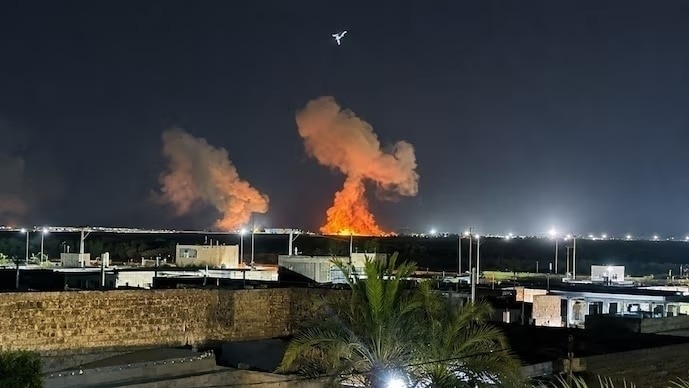
US airstrikes killed three people and injured eight in Iran's southern Hormozgan province overnight, Iranian state media reported on Saturday, as Washington launched a fresh round of attacks against the country and Tehran claimed to have intensified retaliation across the Gulf. Iran's state news agency IRNA, citing Hormozgan's deputy governor for political, security and social affairs, said the casualties occurred after "enemy attacks" targeted several parts of the southern province. Read Full Story The latest strikes marked the seventh consecutive night of US military operations against Iran. In a statement posted on X, US Central Command (CENTCOM) said the attacks were intended to "continue degrading Iranian military capabilities" under the direction of President Donald Trump. IRAN CLAIMS DISRUPTION IN STRAIT OF HORMUZ As fighting intensified, Iran claimed to have further disrupted shipping through the Strait of Hormuz, one of the world's busiest oil transit routes. The Islamic Revolutionary Guard Corps (IRGC) said two oil tankers exploded after entering what it described as a mined route south of the strait.
In a statement carried by IRNA, the Guards alleged the vessels had attempted to cross the area under the guidance of "deceptive American intelligence agencies", though they did not identify the tankers or provide evidence to support the claim. The IRGC also said it had "stopped" four ships attempting to transit the strategic waterway. The claims could not be independently verified. The latest escalation comes as the United States appears to be broadening its military campaign against Iran. Trump has previously threatened to target Iranian infrastructure, although US officials have not confirmed whether the latest strikes included civilian or strategic facilities. Iran accused US forces of targeting civilian infrastructure, including an airport, a railway station and two bridges, while claiming to have struck American military assets across the region. The allegations could not be independently verified. Senior Iranian officials warned that Tehran was prepared to significantly escalate the conflict if US attacks continued. Major General Mohsen Rezaei, a senior military adviser to Supreme Leader Ayatollah Ali Khamenei, said Iran would enter a phase of "full-scale offensive operations" if American strikes persisted for another two or three days.
"Iran will no longer limit itself to retaliatory, like-for-like responses, and no political border will be safe," Rezaei said, according to Iranian state media. Revolutionary Guards aerospace commander Majid Mousavi also vowed that Iranian missile and drone strikes would continue until the United States halted operations against Iran's southern coastal facilities and areas around the Strait of Hormuz. TEHRAN WARNS OF WIDER REGIONAL OFFENSIVE The conflict has increasingly spread beyond Iran, drawing several Gulf states into the confrontation. Kuwait said an Iranian attack damaged a power and water facility, prompting authorities to urge residents to conserve electricity. The Kuwaiti military also reported that several personnel were wounded after Iranian drones targeted multiple military sites. Iran's Revolutionary Guards said they had targeted US radar systems and military aircraft in Qatar, while Qatari authorities said their air defences intercepted incoming missiles. Tehran also claimed to have struck two US radar installations in Oman and the Al-Tanf military base in Syria. A Syrian military source denied the reported attack, while US officials said American forces had already withdrawn from the base earlier this year.
 The BriefWire