What this desert city can teach the world about tackling heat deaths
It has been a blisteringly hot summer for much of the US and Europe. Scientists have warned that these extreme temperatures are the new normal
It has been a blisteringly hot summer for much of the US and Europe. Scientists have warned that these extreme temperatures are the new normal for these communities. France reported an increase of more than 2,000 deaths during the record-breaking heatwave in late June. In England and Wales, scientists estimated that more than 2,700 people may have died from heat-related causes from a series of heatwaves since May.
And in the US, at least 44 heat-related deaths were reported over the 4 July holiday weekend from the extreme weather. For many, the rising temperatures have been a shock to the system, a new reality people have had to adjust to as extreme weather events become more frequent and intense with climate change. "People don't realise this is not the same heat that we were experiencing 10 years ago, it is actually worse, because in many cases nighttime temperatures are not cooling off," Jennifer Marlon, a Yale University researcher who looks at the impacts of extreme heat, told the BBC.
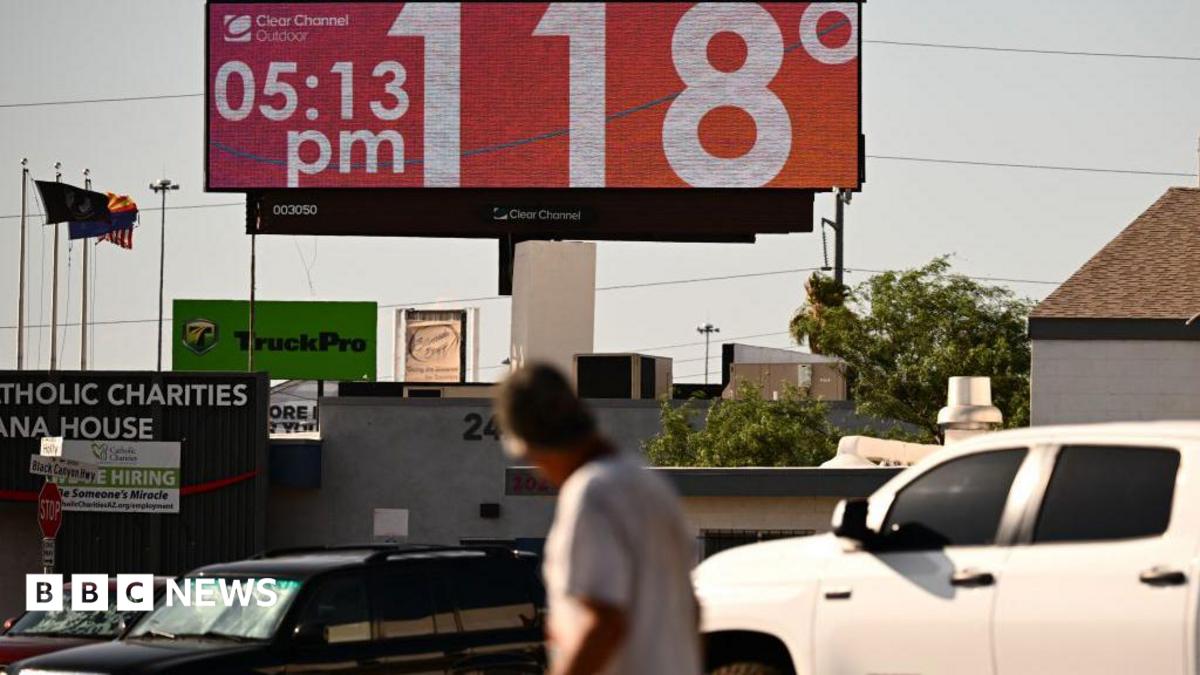
Our bodies rely on cooler nighttime temperatures to recover from the heat of the day. But for one city in the US, hot temperatures are not new. Officials in Phoenix, Arizona, have spent years working on solutions to reduce heat deaths, an effort that seems to be working, and
could provide a blueprint for the world. Maricopa County where Phoenix is located, has some of the hottest temperatures in the US so it finds itself at the forefront of the battle over heat safety - working on programmes that offer residents access to cooling centres and free air conditioning.
 The BriefWire