Israeli military strikes add to civilian suffering in Gaza, West Bank and Lebanon
The latest UN humanitarian update on conditions in Gaza and the West Bank, released on 15 May, reports that most people in Gaza are displaced
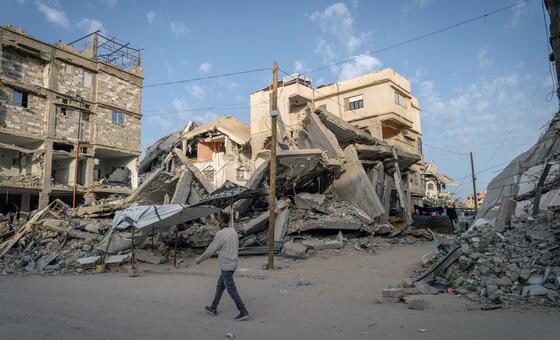
The latest UN humanitarian update on conditions in Gaza and the West Bank, released on 15 May, reports that most people in Gaza are displaced and exposed to health and environmental risks, while residential areas remain under attack. On Wednesday, hundreds of families were forcibly displaced from areas in eastern Deir al Balah to other parts of Gaza. Palestinian militia forces reportedly went to people’s shelters and ordered them out. Displaced families say they also received phone calls from people who identified themselves as Israeli forces, instructing them to leave within a short period of time. Health Hazards On Thursday, the UN brought pesticides into Gaza to help address the growing risks related to insects and other hazards. A pest control campaign is set to start next week, prioritising areas where waste has accumulated within or near residential areas, as well as around food storage facilities and public markets. Humanitarian partners say that to provide a more complete response to risks linked to rodents and pests, the Israeli authorities must let in critical rubble removal and explosive ordnance clearance equipment; and facilitate access to Gaza’s two sanitary landfills near the Strip’s perimeter.
Sorely needed aid supplies are trickling into Gaza: only one in every two aid trucks from Egypt could offload at Israeli-controlled crossings along Gaza’s perimeter in the first 11 days of May, based on data tracked by the UN-led logistics cluster, which coordinates deliveries. However, despite the constraints, humanitarian partners are helping people in Gaza restore bread production and strengthen early market recovery. ‘A catastrophe of grave proportions’ The update coincided with the UN commemoration of the 78th anniversary of the Nakba, in which more than 750,000 Palestinians were uprooted from their homes. Khaled Khiari, Assistant Secretary-General for the Middle East, said that the situation in Gaza today is a catastrophe of grave proportions. The senior UN official said that, since the horrific terrorist attacks by Hamas on 7 October 2023, devastation from the subsequent war has been staggering, with more than 85 per cent of Gaza’s population displaced, many repeatedly so. Over 43,000 people in Gaza have sustained life‑changing injuries, the World Health Organization (WHO) estimates, while rehabilitation services remain overstretched. Spike in settler violence Civilian suffering is not confined to Gaza: the Jordan Valley has witnessed a spike in settler violence, with the monthly average of incidents causing casualties or property damage increasing 14-fold since 2020.
 The BriefWire