Chicks hatched from artificial eggshells, a new mission to study Earth's magnetosphere and more science stories
More Technology news · Trending news
Published 5/23/2026, 4:30:00 PM · Updated 5/23/2026, 8:04:04 PMBy TheBriefWire Editorial Team
Key points
- A buzzy de-extinction company is making headlines again, the Smile spacecraft launched on its way to observe Earth's magnetic shield in action, and a new study cast doubt on the existence of water vapor plumes on Europa.
- Plus, SpaceX's Starship V3 lifted off for the first time.
- Here are this week's most interesting science stories.
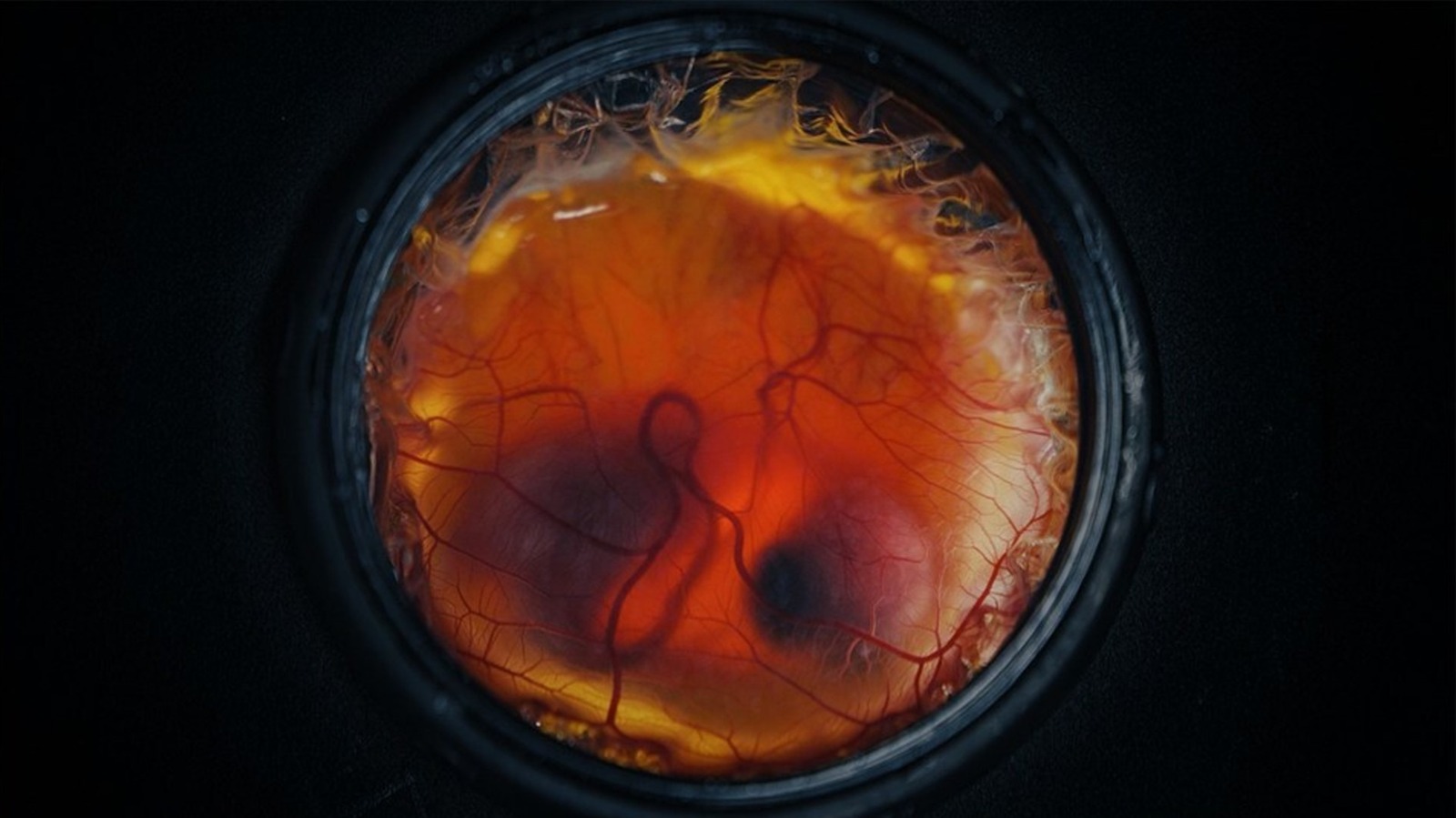
- Chicken or artificial egg Colossal Biosciences, the "de-extinction" biotech company best known for its claims of reviving the dire wolf, announced this week that it has hatched 26 healthy chicks from 3D-printed artificial eggshells.
- According to the company, it's a step toward its goal of bringing back the South Island giant moa (Dinornis robustus), an enormous bird that's been extinct for some 600 years, and the dodo.
Published May 23, 2026.
Quick Summary
A buzzy de-extinction company is making headlines again, the Smile spacecraft launched on its way to observe Earth's magnetic shield in action, and a new
Why It Matters
This development is important because it may impact public opinion, policy decisions, and future developments related to Chicks hatched from artificial eggshells, a new mission to s.
Key Takeaways
- A buzzy de-extinction company is making headlines again, the Smile spacecraft launched on its way to observe Earth's magnetic shield in action, and a new study cast doubt on the existence of water vapor plumes on Europa.
- Plus, SpaceX's Starship V3 lifted off for the first time.
- Here are this week's most interesting science stories.
- Chicken or artificial egg Colossal Biosciences, the "de-extinction" biotech company best known for its claims of reviving the dire wolf, announced this week that it has hatched 26 healthy chicks from 3D-printed artificial eggshells.
- According to the company, it's a step toward its goal of bringing back the South Island giant moa (Dinornis robustus), an enormous bird that's been extinct for some 600 years, and the dodo.
A buzzy de-extinction company is making headlines again, the Smile spacecraft launched on its way to observe Earth's magnetic shield in action, and a new study cast doubt on the existence of water vapor plumes on Europa. Plus, SpaceX's Starship V3 lifted off for the first time. Here are this week's most interesting science stories. Chicken or artificial egg Colossal Biosciences, the "de-extinction" biotech company best known for its claims of reviving the dire wolf, announced this week that it has hatched 26 healthy chicks from 3D-printed artificial eggshells. According to the company, it's a step toward its goal of bringing back the South Island giant moa (Dinornis robustus), an enormous bird that's been extinct for some 600 years, and the dodo. Colossal's artificial eggshell is made up of a semi-permeable silicone-based membrane lattice that allows oxygen to pass through while still protecting the inner contents, and a rigid support cup that holds it all together. The embryo is taken from an egg laid in the usual way, by a hen. "In the current workflow, scientists examine eggs laid by real hens within 24 to 48 hours of laying, select viable candidates, and transfer the contents — minus the shell — into the artificial egg structure," Colossal explained in a blog post. "All upstream biology, from fertilization through laying, still occurs in a living bird.
For de-extinction applications, the artificial egg is intended as a later-stage incubation vessel, not the point of genetic intervention." The moa laid eggs roughly eight times the size of an emu's, so no species alive today could serve as a surrogate for the entire process. Colossal says it is eyeing the Nicobar pigeon as a possible surrogate egg-producer for its dodo project, and is considering the emu or tinamou for the moa. Colossal Biosciences Colossal's methods and de-extinction goals have garnered a fair share of critics over the years, many of whom have questioned the purpose of focusing on resurrecting extinct species while there are plenty of endangered species today that could benefit from this type of intervention. Colossal says its system could be applied to conservation. And just as some scientists argued that Colossal's dire wolves aren't true dire wolves but genetically modified gray wolves, skeptics say the latest announcement should be taken with a grain of salt. "They might be able to use this technology to help them make a genetically modified bird, but that's just a genetically modified bird. It's not a moa," Vincent Lynch, an evolutionary biologist with the University at Buffalo, told the Associated Press. "That's not an artificial egg because you've poured in all the other parts that make it an egg. It's an artificial eggshell," Lynch added.
Smile spacecraft to study Earth's 'invisible armor' The European Space Agency (ESA) and the Chinese Academy of Sciences (CAS) this week launched a joint mission to gather the first "We are about to witness something we've never seen before — Earth's invisible armour in action," ESA Director General Josef Aschbacher said. "The evidence that Smile collects will help us better understand planet Earth and our solar system as a whole," added ESA Smile Project Scientist Philippe Escoubet. "And the science it uncovers will improve our models of Earth's magnetic environment, which could ultimately help keep our astronauts and space technologies safe for decades to come." Water vapor plumes on Europa? Maybe not A new analysis of data from the Hubble Space Telescope has scientists questioning previous findings that Jupiter's moon Europa is spitting plumes of water vapor into space. It's been thought that cracks in Europa's icy shell could allow water from its subsurface ocean to escape, and in 2014, researchers announced that this did indeed appear to be the case. But, after looking at 14 years of Hubble data from its Space Telescope Imaging Spectrograph (HST/STIS), members of that same team now say the earlier conclusion "just doesn't hold up the same way anymore." NASA "The evidence for water vapor plumes on Europa isn't as strong as we first understood it," Dr. Kurt Retherford from Southwest Research Institute (SwRI), one of the authors of a 2014 paper, said.
"One of the difficulties in interpreting the data back then was determining where to place Europa within its context," Retherford said. "The way Hubble works left some uncertainty in terms of placement relative to the center of the image. If Europa's placement was off even just by a pixel or two, it could affect how the data gets interpreted." In the new study, the researchers looked at Lyman-alpha emissions, which are associated with hydrogen atoms. "Our reanalysis took our original 99.9 percent confidence in the plumes' existence and reduced it to less than 90 percent confidence," said lead author Dr. Lorenz Roth, from KTH Royal Institute of Technology. "That's simply not enough evidence to support the certainty of claims we made at the time." The previous findings, they say, may have been based on statistical noise. But it's still within the realm of possibility that Europa is home to water vapor plumes, and it may not be long before we have a better understanding of what's going on there. In 2024, NASA launched its Europa Clipper mission to study the icy moon. It's expected to reach Jupiter in April 2030 and perform its first Europa flyby the following year. Before you go, be sure to check out these stories too
📌 Source: engadget.com
 The BriefWire