Birthright Citizenship Around The World: How The Law Differs As Compared To US
Birthright Citizenship Around The World: How The Law Differs As Compared To US Published By, Last Updated: June 30, 2026, 20:53 IST Most countries follow
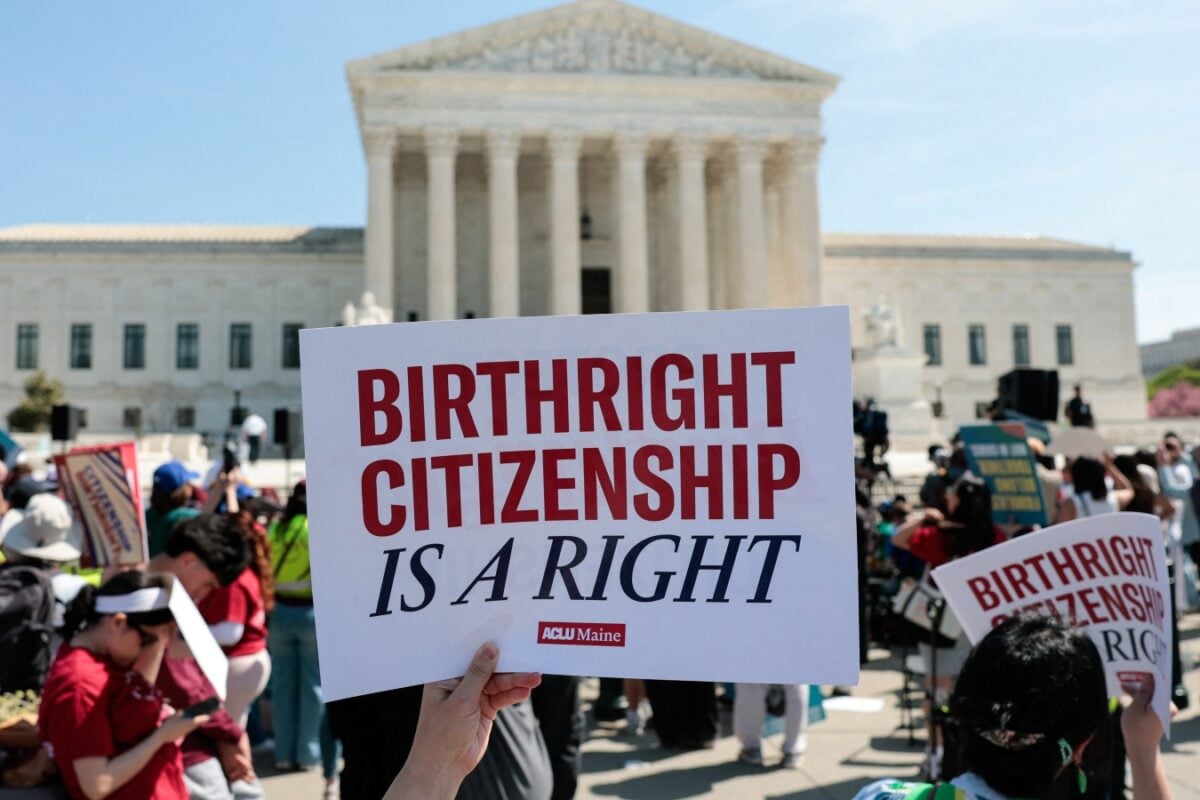
Birthright Citizenship Around The World: How The Law Differs As Compared To US Published By, Last Updated: June 30, 2026, 20:53 IST Most countries follow “jus sanguinis” (right of blood), where citizenship is based on the nationality of the parents rather than place of birth. Demonstrators rally in support of birthright citizenship outside the US Supreme Court in Washington. (AFP file photo) In a major setback for US President Donald Trump, the US Supreme Court on Tuesday rejected his administration’s attempt to restrict birthright citizenship, preserving the constitutional guarantee of citizenship for nearly everyone born on American soil. In a 6-3 ruling on the final day of its term, the court blocked Trump’s executive order that sought to end automatic citizenship for children born in the US to parents who are in the country illegally or on temporary visas. The court upheld the long-standing interpretation of the 14th Amendment, reinforcing that most people born in the country are US citizens at birth.
What the law says in the United States? The US approach is rooted in the 14th Amendment to the Constitution, adopted in 1868. It states that “[a]ll persons born or naturalized in the United States, and subject to the jurisdiction thereof, are citizens of the United States and of the State wherein they reside." Over time, a landmark 1898 Supreme Court ruling helped establish that birthright citizenship applies broadly, with only narrow exceptions such as children of foreign diplomats or occupying forces. Congress later extended citizenship rights to Native Americans in 1924. How other countries differ? The US is unusual compared to much of the world. A Pew Research Center analysis published on March 31 found that only about 33 countries offer similarly broad birthright citizenship. Most countries instead follow “jus sanguinis" (right of blood), where citizenship is based on the nationality of the parents rather than place of birth. According to global datasets, 156 out of 191 countries automatically grant citizenship at birth only if one or both parents are citizens.
Another 59 countries allow at least some form of birthright citizenship, but often with conditions. In 17 of these, children born to non-citizen parents qualify only if the parents are legally resident. In some cases, citizenship may require application approval or administrative discretion. A smaller group of countries also impose further limits. Six restrict birth-based citizenship to specific ethnic, racial, or religious groups. “In six other countries, birthright citizenship only applies to members of particular racial, ethnic or religious groups. (Guinea-Bissau, for instance, extends it only to children whose parents are citizens of a Portuguese-speaking country.)," the analysis noted. Meanwhile, 26 countries require a “second-generation" link — meaning a child is eligible only if at least one parent was also born in that country. “Nearly half (11) of these “second-generation" countries also restrict eligibility by parental residency status, gender or membership in a particular group," the report noted. News18 Newsletter Handpicked stories, in your inbox A newsletter with the best of our journalism submit About the Author News Desk The News Desk is a team of passionate editors and writers who break and analyse the most important events unfolding in India and abroad.
 The BriefWire