Nostalgia On Signboards: Real Strategy Behind Pakistan’s Pre-Partition Rebranding & Why It’s Only For 'Namesake'
Nostalgia On Signboards: Real Strategy Behind Pakistan’s Pre-Partition Rebranding & Why It’s Only For 'Namesake' Written By, Last Updated: May 19, 2026, 19:23 IST While
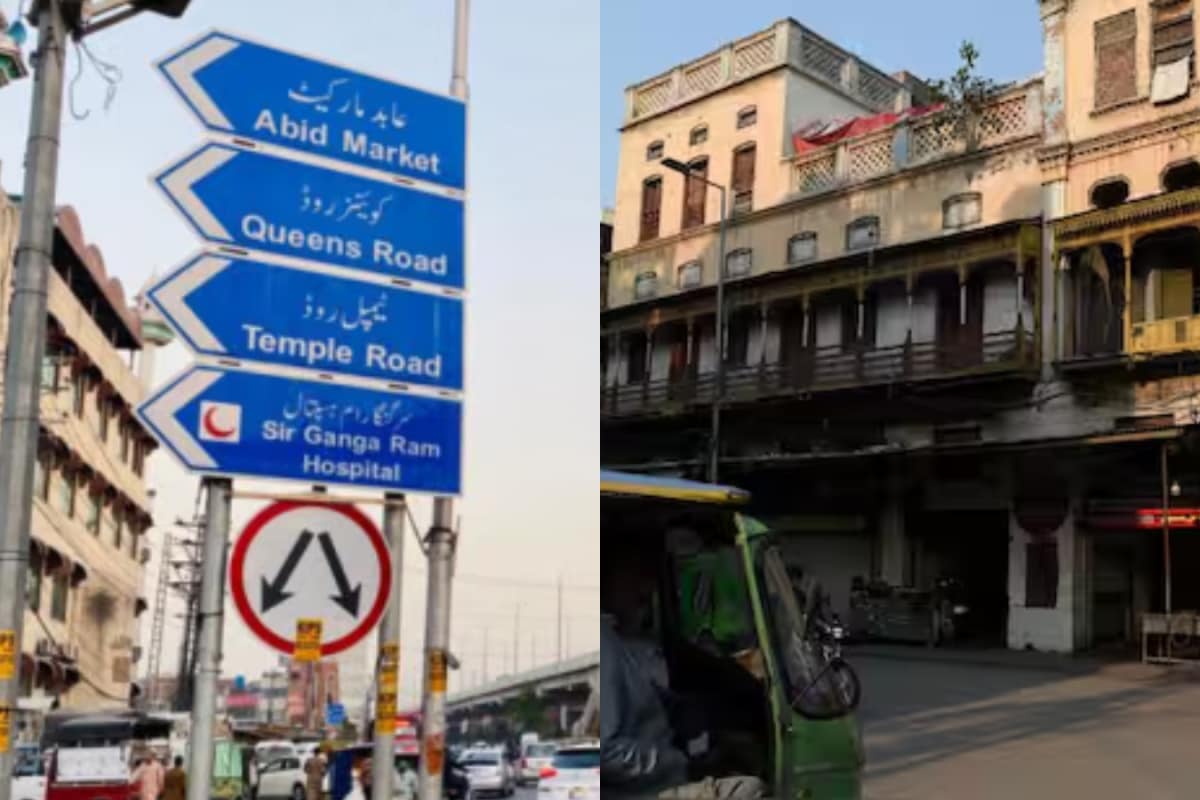
Nostalgia On Signboards: Real Strategy Behind Pakistan’s Pre-Partition Rebranding & Why It’s Only For 'Namesake' Written By, Last Updated: May 19, 2026, 19:23 IST While changing the nomenclature on a map is a swift administrative task, rewriting the deep-seated structural realities of modern Pakistan is entirely different The renaming drive is part of the Lahore Authority for Heritage Revival (LAHR), a massive urban conservation initiative launched in 2025. Image/X Nearly eight decades after the trauma of Partition violently carved the subcontinent apart, Lahore is executing a startling administrative about-turn. Pakistan’s Punjab Cabinet, chaired by Chief Minister Maryam Nawaz, has officially approved a sweeping plan engineered by the Lahore Authority for Heritage Revival (LAHR)—headed by former Prime Minister Nawaz Sharif—to strip away decades of bureaucratic Islamisation from the city’s maps. Across the cultural capital, the metal signboards are changing. Islampura has officially reverted to its original title of Krishan Nagar. Sunnat Nagar is once again Sant Nagar, and Mustafaabad has transformed back into Dharampura. Even iconic traffic junctions are getting a historical reset: Babri Masjid Chowk has been stripped of its reactive title to become Jain Mandir Chowk once more, while the commercial epicentre of Maulana Zafar Ali Khan Chowk has reclaimed its flamboyant pre-1947 identity as Lakshmi Chowk.
To casual observers, this appears to be a profound moment of historical reconciliation. However, political analysts and regional experts argue that beneath the pristine coats of paint on these new street signs lies a calculated geopolitical strategy—one that is fundamentally destined to clash with an unyielding structural reality on the ground. The Soft-Power Gambit: Subcontinental Geopolitics The sudden rush to restore Hindu, Sikh, Jain, and colonial-era names to Lahore’s alleys is not merely a localised exercise in urban conservation; it is an aggressive exercise in cultural diplomacy directed squarely at India. By orchestrating this visual transformation, the ruling Pakistan Muslim League-Nawaz (PML-N) is attempting to bypass the frozen, militarised diplomatic channels of New Delhi and appeal directly to the Indian public and the global diaspora. The strategy seeks to build a narrative of Punjabi shared heritage and secular inclusivity. By preserving Sikh-era frescoes at Lahore Fort, showcasing paintings of Princess Bamba Sutherland, and restoring the legendary wrestling akharas and historic cricket grounds at Minto Park, the Sharif administration is attempting to project Lahore as a progressive, tolerant oasis. This cosmetic multiculturalism is designed to place Pakistan on the moral high ground, creating a stark visual contrast at a time when several Indian municipalities are actively renaming Mughal-era cities and railway stations.
 The BriefWire