Moon fashion: After Jeff Bezos' wife Lauren Sanchez's designer spaceflight look, NASA astronauts could wear Prada on the Moon
Why NASA's Moon astronauts could wear Prada-developed gear Artemis missions will face harsher conditions than Apollo More than a fashion statement The path back to
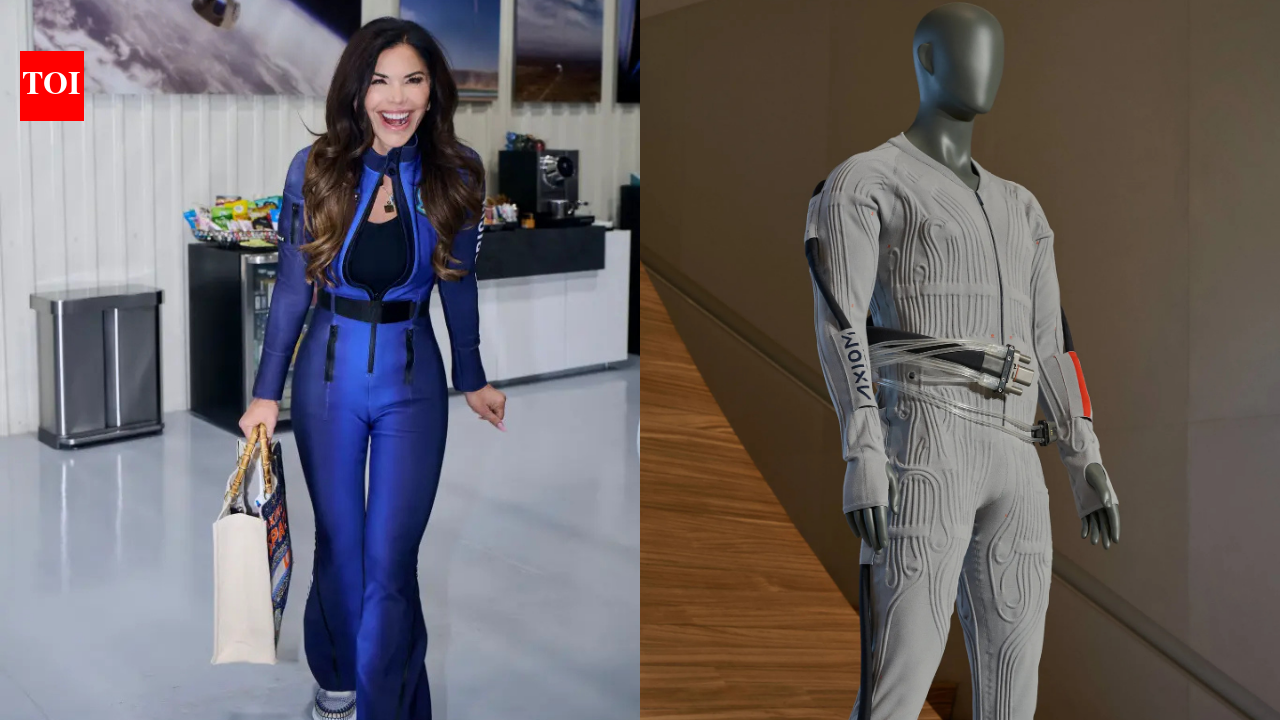
Why NASA's Moon astronauts could wear Prada-developed gear Artemis missions will face harsher conditions than Apollo More than a fashion statement The path back to the Moon When Lauren Sánchez and an all-female crew flew aboard Blue Origin's New Shepard mission earlier this year, their fitted designer flight suits sparked widespread discussion about the intersection of fashion and space travel. Now another luxury fashion giant is preparing for a far more demanding challenge. Italian luxury brand Prada has unveiled a key component of a next-generation spacesuit that could eventually be worn by NASA astronauts on the Moon. Developed in partnership with Axiom Space, the high-tech garment is designed not for a brief suborbital flight but for future lunar exploration missions that could return humans to the lunar surface for the first time since the Apollo era.At first glance, a collaboration between a luxury fashion house and a space company may seem unusual. Yet Prada's role extends far beyond branding. The company has spent decades developing advanced textiles, performance fabrics and specialised manufacturing techniques through projects such as its Luna Rossa sailing programme.Those capabilities attracted Axiom Space, the commercial space company selected by NASA to develop next-generation lunar spacesuits for the Artemis programme.Axiom executives have repeatedly emphasised that Prada's expertise in materials engineering and garment construction played an important role in the partnership.The latest product unveiled by Prada and Axiom Space is known as the Liquid Cooling and Ventilation Garment, or LCVG.
It serves as the inner layer worn directly against an astronaut's body underneath the larger AxEMU spacesuit.Its purpose is critical. The garment helps regulate body temperature, removes excess heat and connects to the suit's life-support systems. Without effective cooling, astronauts performing physically demanding tasks on the Moon could face dangerous temperature fluctuations.According to Axiom Space, this layer is among the most important components of the entire spacesuit because it sits closest to the astronaut and directly affects comfort and safety during lunar operations.The spacesuits being developed for Artemis missions are designed for a very different environment from the one explored by Apollo astronauts.NASA intends to send astronauts to the Moon's South Pole, a region that contains permanently shadowed craters and areas exposed to prolonged sunlight. Engineers say astronauts could encounter dramatic temperature differences while moving between sunlit and shadowed terrain.In some situations, one side of an astronaut's body could be exposed to intense sunlight while another remains in deep shadow.
 The BriefWire