Czechia: Uproar over Sudeten German gathering in Brno
The first gathering of Sudeten Germans in Czechia since World War II is set to go ahead this weekend despite a political backlash that has
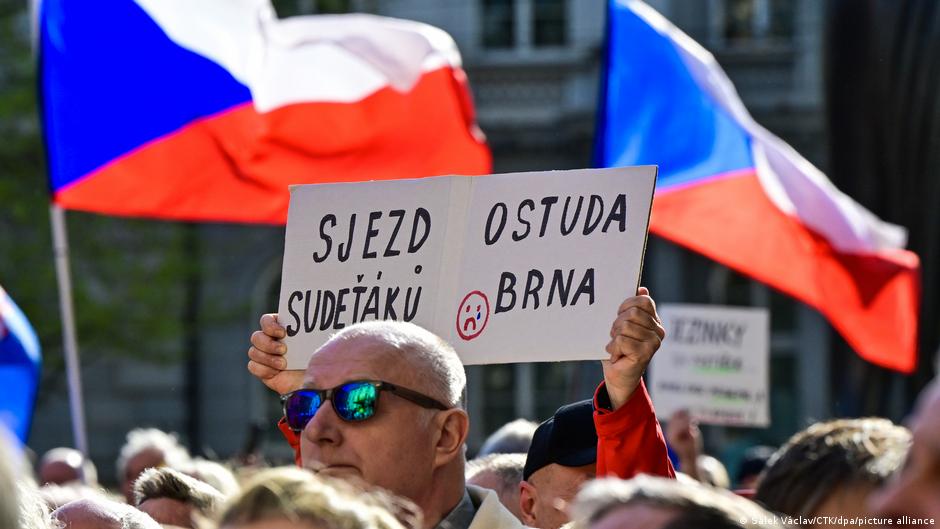
The first gathering of Sudeten Germans in Czechia since World War II is set to go ahead this weekend despite a political backlash that has exposed tensions over one of Central Europe's most painful historical legacies. The annual Sudetendeutscher Tag, a meeting of ethnic Germans expelled from Czechoslovakia after the Second World War and their descendants, will take place in the Czech city of Brno from May 22 to 25 as part of the Meeting Brno festival of reconciliation. But the event has triggered protests and a parliamentary declaration warning against what some Czech lawmakers called "historical revisionism" and the "relativization of Nazi crimes." "The Chamber of Deputies expresses its opposition to the holding of the 76th convention of the Sudetendeutsche Landsmannschaft [Sudeten German Association] on the territory of the Czech Republic, in view of the historical context and the fact that attitudes questioning the postwar settlement have long appeared within parts of this movement," read the declaration passed in the lower house of the Czech parliament on Friday. The motion, which was symbolic and non-binding, passed by 73 votes to none, with four abstentions. Boycott in parliament Center-right opposition parties boycotted the debate, accusing the governing coalition — which includes the far-right SPD party — of exploiting the issue for political gain. Prime Minister Andrej Babis has apparently changed his stance on the event. He recently said that the gathering in Brno is "not a fortunate development" despite having previously referred to it in neutral terms as a civic initiative that the Czech government was not dealing with. The event has also drawn protests in Brno itself. Around 500 people joined a demonstration in April organized by the SPD. The SPD is firmly opposed to the gathering and accuses Sudeten German organizations of seeking to overturn the postwar Benes decrees that confiscated German property and stripped ethnic Germans of citizenship.
This accusation is rejected by Bernd Posselt, chairman of the Sudeten German Association, the main organization representing Sudeten German expellees. Posselt has stressed that the Sudeten German Association no longer seeks to challenge the postwar order and described the event as an effort at reconciliation. In 2015, the association made some key changes to its charter, among other things removing references to reparations and the reclamation of land. Posselt, a former MEP for Bavaria's conservative Christian Social Union, told DW that the organization wanted an honest discussion of the past. He has since criticized the parliamentary declaration and insisted the gathering would go ahead. Bernd Posselt, chairman of the Sudeten German Association, says that 'at a time when war and nationalism are growing worldwide, this meeting between us and our Czech friends is very important' Image: Daniel Karmann/dpa/picture alliance The organizers of the Meeting Brno festival also issued a statement saying that the gathering will proceed as planned despite the controversy. 'A very important meeting' "I think that at a time when war and nationalism are growing worldwide, this meeting between us and our Czech friends is very important," Posselt told DW by telephone from Munich. "It shows that we, as Europeans and Central Europeans, have learned from history — including us as Sudeten Germans," he said "Our first aim is to look objectively at history. We strongly condemn what the German Nazis, including many Sudeten Germans, did against the Czech people. But we also ask Czechs — and we have many Czech friends — to look at the dark points of their own history," said Posselt. "This is about dealing with the moral aspects of history but also recognizing the 800 years of productive cooperation in the country." Focus on reconciliation The gathering is being hosted by Meeting Brno, a civic initiative focused on Czech-German reconciliation and remembrance of both Nazi crimes and the postwar expulsions.
 The BriefWire