Train ticket changed from RAC to WL, man wins Rs 5k
Why Singh won the case against Railways Delhi State Consumer Commission order and analysis Railways failed to inform him about RAC to WL status change
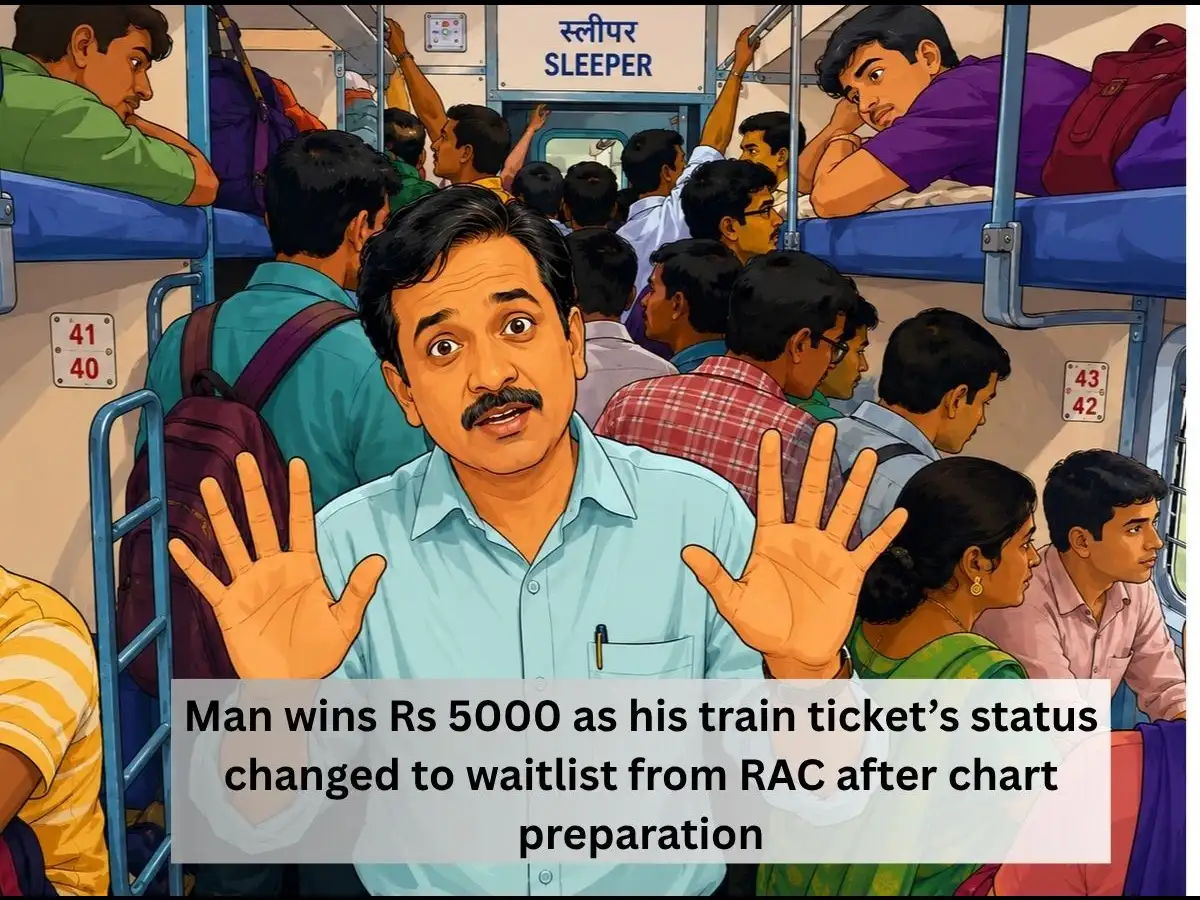
Why Singh won the case against Railways Delhi State Consumer Commission order and analysis Railways failed to inform him about RAC to WL status change in time Consumer Commission has jurisdiction When Mr Singh from Uttam Nagar, Delhi wanted to travel to his native village in October 2012, he booked a sleeper class train ticket in Simanchal Express. However, at the time of booking, the booking status of sleeper class berth was RAC/43. In RAC ticket, you can travel in the train but will have to share a berth with another passenger. In waitlist ticket, you cannot travel if it is not cofirmed.So despite the ticket's status being RAC, Singh booked it thinking that by October 31, 2012 (his travel date) the RAC ticket would be confirmed. Instead to his surprise, when he reached Anand Vihar Railway Station at 6.30 AM on October 31, 2012, he discovered that the train’s chart showed his ticket as waiting list 44 (WL/44) instead of RAC 43 which he had originally booked.He immediately raised the issue with the railway staff and asked the TTE for assistance. Instead of helping him, the TTE explained that some coaches had been removed from the train, which is why his RAC/43 status had changed to waiting. With no other option, he had to stand for the entire train journey.After his trip, he sent a legal notice through his advocate demanding compensation against the deficiency in services by the Railways. In reply to this notice, the railways on February 15, 2013 informed him that one coach, SE-1, was removed by the operating branch, due to which RAC/43 became waiting list 44, but they did not mention anything about compensation.So Singh decided to file a consumer complaint against the Railways for deficiency of service since he had to stand the entire distance from Anand Vihar to Katihar Junction, for which he felt entitled to compensation.On March 11, 2020, the district consumer commission at M Block, 1st Floor, Vikas Bhawan, I.P. Estate, New Delhi passed an order in his favour and ordered the Railways to pay him Rs 5,000 in compensation on account of the pain and mental agony suffered by him.
The Railways filed an appeal against this order in the Delhi State Consumer Commission.On February 27, 2026, the Delhi State Consumer Commission ruled in Mr Singh’s favour and said that they were in agreement with the District Commission that the Railways failed to provide proper and timely intimation to him regarding the change in ticket status. Advocate Anjani Kumar Singh represented Singh in consumer commission.Read on to know why Singh won the case against Railways.Sonam Chandwani, Managing Partner, KS Legal & Associates said to: Singh (the passenger) won because the the important fact was that his booking status was adversely changed because the Railways removed a coach for technical reasons. The passenger was not responsible for that change.Chandwani says the fact that the Railways did not inform Singh of the change in his ticket status before the journey is also something which made a significant bearing in this case as Singh claimed that he came to know about the change in status of his ticket only when he reached Anand Vihar railway station.Thus the failure of the Railways about not informing him about the change in status of the ticket left him with practically no reasonable opportunity to make alternative travel arrangements.Chandwani says: "In my view, that failure in communication was the core deficiency."According to Chandwani, the consumer commission also rejected the Railways’ defence that Singh (the passenger) could have taken a refund or should not have travelled was therefore not sufficient.Once the Railways had altered the circumstances of his reservation, they could not simply shift the entire consequence onto the passenger without having given him timely information. The passenger approached the railway staff and the TTE but was ultimately compelled to travel in extremely inconvenient circumstances. The Consumer Commission therefore treated the matter as a failure in the manner in which the railway service was provided and upheld the modest compensation of Rs 5,000.Chandwani says: "In essence, the passenger did not win because RAC guaranteed him a berth; he won because the Railways’ own action affected his reservation and their failure to inform him in time caused the hardship for which compensation was justified."The President of Delhi State Consumer Commission Justice Sangita Dhingra Sehgal Member Bimla Kumari gave this judgement (FA/150/2020) on February 27, 2026.The main question for consideration before the Delhi State Consumer Commission was whether the District Commission erred in holding the Appellants (Railways) deficient in service towards the Respondent (Mr Singh)The Delhi State Consumer Commission said that the Railways argued that since he didn’t have a confirmed ticket, there was no guarantee for allotment of a berth.
However, on perusal of the record, it was evident that the change in status from RAC-43 to WL-44 occurred due to technical reasons. Technical defect was noticed during wheel gazing, and one coach could not be attached to the train.Delhi State Consumer Commission said that it was also clear that no prior intimation regarding the change in ticket status was given to the Respondent (Singh). He came to know about it only at the time of journey after the chart was prepared.The Delhi State Consumer Commission said: “Thus, the appellants (the Railways) failed to inform the respondent (him) in time, due to which the Respondent (he) could not make any alternative arrangements. Therefore, the lapse on the part of the appellants (railways) amounts to a shortcoming in service.”The railways had contended that the Consumer Forum had no jurisdiction and that the dispute fell within the Railway Claims Tribunal Act, 1987.From the analysis of the consumer act and definitions, the state consumer commission said that it was clear that deficiency refers to any fault, imperfection, shortcoming or inadequacy in the quality, nature and manner of performance which is required to be maintained by any person in pursuance of a contractual obligation.In the present matter, his grievance arose from the manner in which the service was rendered. It is an admitted position that the status of his ticket was changed from RAC-43, to WL44 due to removal of a coach on account of technical reasons. Also, he came to know about the change only at the time of journey.The Delhi State Consumer Commission said: “Therefore, the complaints relating to deficiency in service are maintainable before Consumer Fora and the existence of another remedy does not bar the jurisdiction of Consumer Fora.
Therefore, the District Commission rightly rejected the objection regarding jurisdiction.”Delhi State Consumer Commission said that they are in agreement with the district consumer commission’s order and the Railways indeed have failed to provide proper and timely intimation to the Respondent (Singh) regarding the change in ticket status. The Delhi state consumer commission also said that the Rs 5,000 compensation awarded by the district consumer commission is reasonable.Thus Singh won the case.
 The BriefWire