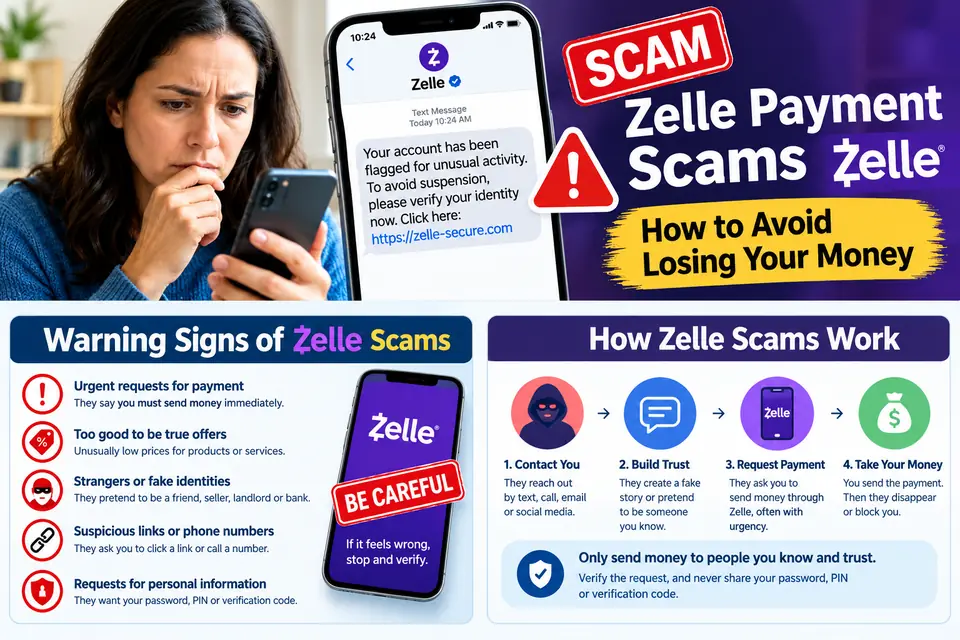
Zelle Payment Scams: How to Avoid Losing Your Money
Imagine you are buying a concert ticket, renting an apartment, purchasing a used car, or sending money to someone who claims to be a family member. They ask you to pay using Zelle because it is fast and convenient.
You send the payment. The money leaves your bank account within minutes.
Then you discover that the seller was fake, the apartment never existed, or the person who contacted you was a scammer pretending to be someone you know.
Your money may already be gone.
Zelle is a popular payment service in the United States that allows people to send and receive money directly through participating banks and credit unions. It is convenient for paying friends, family members, and people you know. However, scammers are increasingly exploiting fast digital payments to steal money from unsuspecting consumers.
Unlike some credit cards or online marketplaces, Zelle does not offer traditional purchase protection for payments made to strangers when goods or services are not delivered.
In this guide, we explain how Zelle scams work, common warning signs, how to protect your money, and what to do if you have already sent a payment to a scammer.
1. What Is a Zelle Payment Scam?
A Zelle payment scam occurs when a criminal tricks someone into sending money through Zelle using deception, impersonation, fake offers, or fraudulent requests.
Scammers may pretend to be:
-
A family member or friend
-
A bank employee
-
A government official
-
An online seller
-
A landlord or property manager
-
A customer support representative
-
A romantic partner
-
A legitimate business
The scammer creates a believable story and pressures the victim into sending money.
In some cases, the victim willingly sends the payment but is deceived about who is receiving it or why. In other cases, criminals gain unauthorized access to a bank account and initiate a transfer without the account holder's permission.
Both situations can result in financial losses, but they are treated differently when reporting the incident and seeking reimbursement.
2. How Do Zelle Scams Work?
Most Zelle scams involve manipulation, impersonation, or fake transactions.
Step 1: The scammer contacts you
The criminal may contact you through a phone call, text message, social media, email, marketplace listing, or dating app.
They offer something attractive or create an urgent problem.
Step 2: They build trust
They may use a fake profile, stolen photographs, a familiar business name, or information about your family to make the situation appear legitimate.
Step 3: They request payment through Zelle
The scammer may tell you that Zelle is the easiest, fastest, or only payment method available.
Sometimes they insist that you must send money immediately to secure an offer or avoid a supposed penalty.
Step 4: You send the payment
Because Zelle transfers are generally fast, money can reach the recipient within minutes.
Step 5: The scammer disappears
After receiving the money, the criminal may block your phone number, delete their social media account, or stop responding.
The seller, apartment, job, service, or emergency may never have existed.
3. Common Zelle Payment Scams Targeting Americans
Fake online marketplace sellers
Scammers advertise popular products such as smartphones, laptops, furniture, electronics, concert tickets, or vehicles at unusually low prices.
They may claim that multiple buyers are interested and insist that you send a Zelle deposit immediately.
After receiving your payment, they disappear without delivering the item.
Example: Someone advertises a $900 laptop for $350 and says they will reserve it only after receiving payment through Zelle. You send the money, but the seller deletes the listing and blocks you.
Rental and apartment deposit scams
Criminals create fake rental listings using photographs taken from legitimate property listings.
They may claim to be the owner or property manager and ask for a deposit, application fee, or first month's rent through Zelle before you see the property.
After receiving payment, they disappear.
Be especially careful when someone refuses to show you the property, claims they are out of town, or pressures you to pay before signing a legitimate rental agreement.
Fake bank fraud department scams
A scammer calls or texts you pretending to be a bank employee.
They claim your account has been compromised and instruct you to transfer your money through Zelle to a supposedly safe account.
The account actually belongs to the criminal.
Your bank will not require you to send your money to a stranger's Zelle account to protect it from fraud.
The fake "pay yourself" scam
You receive a call from someone claiming to be a bank representative. They tell you that your account is at risk and instruct you to send money to yourself through Zelle.
They may manipulate you into changing the recipient information, sharing a verification code, or sending money to an account controlled by them.
Never share one-time passwords or verification codes with someone who contacts you unexpectedly.
Fake family emergency scams
Someone contacts you pretending to be your child, grandchild, relative, or friend.
They claim they have been arrested, involved in an accident, or facing an emergency and urgently need money.
The scammer may use a cloned voice, fake phone number, or another person pretending to be a lawyer or police officer.
Always verify the emergency by contacting your relative through a number you already know.
Romance scams
Criminals build relationships with victims through dating apps, social media, or messaging platforms.
After gaining trust, they claim to have an emergency, travel problem, medical expense, or financial difficulty.
They ask you to send money through Zelle and may continue requesting additional payments.
Never send money to someone you have not independently verified, especially someone you have never met in person.
Fake job scams
Scammers advertise remote jobs or freelance opportunities and ask applicants to send money through Zelle for training, equipment, registration, or background checks.
Some scammers send fake checks and ask victims to transfer part of the money to another person using Zelle.
The check may later bounce, leaving you responsible for the money you sent.
A legitimate employer should not require you to send money to an unknown person through a payment app to receive a job.
Fake government or utility payment scams
Someone pretends to be from the IRS, law enforcement, a government agency, or a utility company.
They threaten arrest, fines, service disconnection, or other consequences unless you send money immediately.
These threats are designed to frighten you into making a payment without checking the claim.
Do not send money through Zelle because an unexpected caller threatens you.
4. Warning Signs of a Zelle Scam
Be alert when someone asks you to send money under unusual circumstances.
Common warning signs include:
-
Urgent payment requests: They insist you must send money immediately.
-
Unusually cheap offers: Products, vehicles, rentals, or tickets are priced far below market value.
-
Payment before verification: They want money before you see the product, property, or service.
-
Refusal to meet: The seller or landlord refuses to meet, show the property, or provide verifiable information.
-
Requests from strangers: Someone you have never met insists on Zelle instead of safer payment options.
-
Fake authority: The caller claims to be from your bank, government agency, police department, or utility company.
-
Secrecy: They tell you not to discuss the payment with family members or your bank.
-
Verification code requests: They ask for one-time passwords, login codes, or security information.
-
Safe-account instructions: They tell you to move your money to another account to protect it.
-
Suspicious payment arrangements: They request extra payments, refunds, or transfers to different accounts.
If you feel pressured, stop the transaction. Legitimate sellers and service providers should allow you time to verify the details.
5. Why Is Zelle Risky When Paying Strangers?
Zelle is designed to move money quickly between bank accounts. That convenience also means you need to be careful before sending a payment.
Payments can be difficult to reverse
If the recipient is already enrolled with Zelle, a payment generally cannot be canceled once it has been sent.
If you send money to the wrong person or a scammer, recovering the payment may be difficult.
No traditional purchase protection
Zelle does not provide traditional purchase protection for authorized payments made for goods or services.
For example, if you pay a stranger for a used phone and the phone never arrives, you generally cannot rely on Zelle to reimburse you simply because the seller failed to deliver.
Scammers exploit trust
Criminals may impersonate people you know or organizations you trust.
A payment request may appear legitimate, but the person behind it may be a scammer.
Fast payments give scammers an advantage
Money may reach the recipient within minutes, leaving little time to recognize the scam and stop the transaction.
Treat Zelle like cash. Once you send it, getting it back may be difficult.
6. How to Protect Yourself From Zelle Scams
You can significantly reduce your risk by following these precautions.
Only send money to people you know and trust
Use Zelle primarily to pay friends, family members, and people you have personally verified.
Avoid sending money to strangers for online purchases, rental deposits, or unfamiliar services.
Verify the recipient before sending money
Double-check the recipient's name, phone number, email address, or Zelle tag.
If you are sending money to a family member or friend, confirm the details with them directly before completing the payment.
Never send money to a "safe account"
If someone claims your bank account is compromised and asks you to transfer money to another account, stop.
Contact your bank using the number on your debit card or its official website.
Do not share verification codes
Never give a one-time password, security code, banking password, or PIN to someone who calls or messages you unexpectedly.
Avoid paying strangers through Zelle
For online purchases, ticket sales, rental deposits, or other transactions with people you do not know, consider payment methods that offer appropriate buyer protections.
A credit card may offer better dispute or purchase protections depending on the transaction and the card's terms.
Be cautious about fake checks
Never deposit a check from a stranger and then send money back through Zelle.
Even if your bank initially makes the funds available, the check may later be determined to be fraudulent.
Slow down
Scammers rely on panic and urgency.
If someone insists that you must send money immediately, take a few minutes to verify the request. Contact someone you trust before making an unfamiliar payment.
7. What Should You Do If You Sent Money to a Zelle Scammer?
If you believe you have been scammed, act as quickly as possible.
Step 1: Contact your bank or credit union immediately
If you use Zelle through your bank's app, contact your bank or credit union directly.
Tell them you sent money to a scammer and provide the transaction details.
Ask whether the payment can be stopped, recalled, investigated, or whether reimbursement may be available.
Step 2: Report the transaction to Zelle
Visit the official Zelle support website:
Report a Scam or Fraud to Zelle
If you use Zelle through your bank, Zelle recommends reporting the transaction directly to your bank or credit union as well.
Step 3: Secure your bank account
If you shared your login information or verification codes:
-
Change your online banking password.
-
Change passwords for accounts using the same password.
-
Enable multifactor authentication.
-
Review recent account transactions.
-
Ask your bank whether your account or debit card needs additional protection.
Step 4: Save evidence
Keep copies of:
-
Text messages and emails
-
Phone numbers and caller information
-
Marketplace listings
-
Screenshots of profiles
-
Zelle transaction receipts
-
Bank statements
-
Any other communication with the scammer
Do not delete evidence before reporting the incident.
Step 5: Report the scam
You can report the incident to:
If identity information was stolen, visit IdentityTheft.gov for recovery guidance.
Step 6: Beware of recovery scams
After losing money, you may receive messages from people claiming they can recover your payment.
They may pretend to be investigators, lawyers, recovery specialists, or cryptocurrency experts.
They ask for an upfront fee to recover your money.
Be cautious. These may be additional scams targeting people who have already lost money.
8. Can You Get Your Money Back From Zelle?
It depends on the type of transaction and the circumstances.
There is an important difference between an unauthorized transaction and a payment you personally authorized after being deceived.
Unauthorized Zelle transactions
If someone gained access to your bank account and sent money without your permission, report it immediately to your bank or credit union.
Unauthorized transactions may qualify for reimbursement under applicable rules and Zelle's network requirements, subject to investigation and the circumstances.
Payments you authorized to a scammer
If you personally sent money because a scammer deceived you, reimbursement is not automatic.
Zelle's network rules require reimbursement for certain qualifying impostor scams, but not every scam payment is covered.
The outcome may depend on the scam type, transaction details, your bank's policies, applicable law, and the investigation.
Payments for goods or services that never arrived
If you used Zelle to pay a stranger for an item, rental, or service and never received what you paid for, Zelle generally does not provide purchase protection for that type of authorized transaction.
You should still report the incident to your bank and Zelle. Ask whether any recovery or reimbursement options are available.
Never assume a payment is unrecoverable without reporting it. Contact your financial institution immediately.
9. Where Can You Report Zelle Scams in the United States?
If you are targeted by a Zelle scam or lose money, these official resources can help.
Zelle Support Zelle Scam and Fraud Reporting Report a scam or fraud incident. If enrolled through a bank or credit union, report it directly to your financial institution.
Federal Trade Commission (FTC) ReportFraud.ftc.gov Report impersonation scams, fake sellers, payment scams, and other consumer fraud.
FBI Internet Crime Complaint Center (IC3) IC3.gov Report internet-related financial crimes and online scams.
Consumer Financial Protection Bureau (CFPB) ConsumerFinance.gov Submit a complaint about a bank, credit union, or financial service provider.
IdentityTheft.gov IdentityTheft.gov Get help if your identity or personal information has been stolen.
10. Frequently Asked Questions
Is Zelle safe to use?
Zelle can be convenient for sending money to people you know and trust. However, it is risky to use for payments to strangers or unfamiliar sellers because transfers are fast and may be difficult to reverse.
Can a Zelle payment be reversed?
A payment to someone already enrolled with Zelle generally cannot be canceled after it is sent. If you sent money to a scammer, contact your bank immediately to see whether any recovery options are available.
Will Zelle refund money if I was scammed?
Not every scam payment is eligible for reimbursement. Certain qualifying impostor scams may be eligible, and unauthorized payments may qualify under applicable protections and network rules. Report the transaction promptly to your bank.
What should I do if a stranger asks me to use Zelle?
Do not send the money unless you have independently verified the person and transaction. For purchases from strangers, use payment methods that provide appropriate buyer protections.
Can someone steal my money using my Zelle phone number?
Your phone number alone generally is not enough to authorize a payment from your account. However, scammers may use your number to impersonate you, send fraudulent requests, or trick you into revealing account information or verification codes.
What is the fake Zelle bank scam?
A criminal pretends to be a bank employee and claims your account is compromised. They instruct you to send money through Zelle to a supposed safe account. The destination account actually belongs to the scammer.
Should I send money to someone who says they are from the police or IRS?
No. Do not send money through Zelle because an unexpected caller threatens arrest, fines, or other consequences. Verify the claim independently through official channels.
What if I sent money to the wrong person?
Contact your bank immediately. Explain the mistake and ask whether the payment can be recovered. If the recipient is already enrolled, cancellation may not be possible, but you should still report the issue.
Final Thoughts
Zelle makes it easy to send money, but scammers are taking advantage of that convenience to target Americans through fake sellers, rental listings, family emergencies, romance scams, and impersonation schemes.
The most important rule is simple:
Only send money through Zelle to people you know and trust.
Before sending a payment, verify the recipient, confirm the reason for the payment, and never act under pressure from an unexpected caller or message.
If someone claims to be protecting your bank account and tells you to transfer money to another person, stop and contact your bank directly.
A few minutes of verification could save you hundreds or thousands of dollars.
Share this guide with family members, friends, and anyone who uses digital payment apps. Awareness can help prevent financial loss.
 The BriefWire