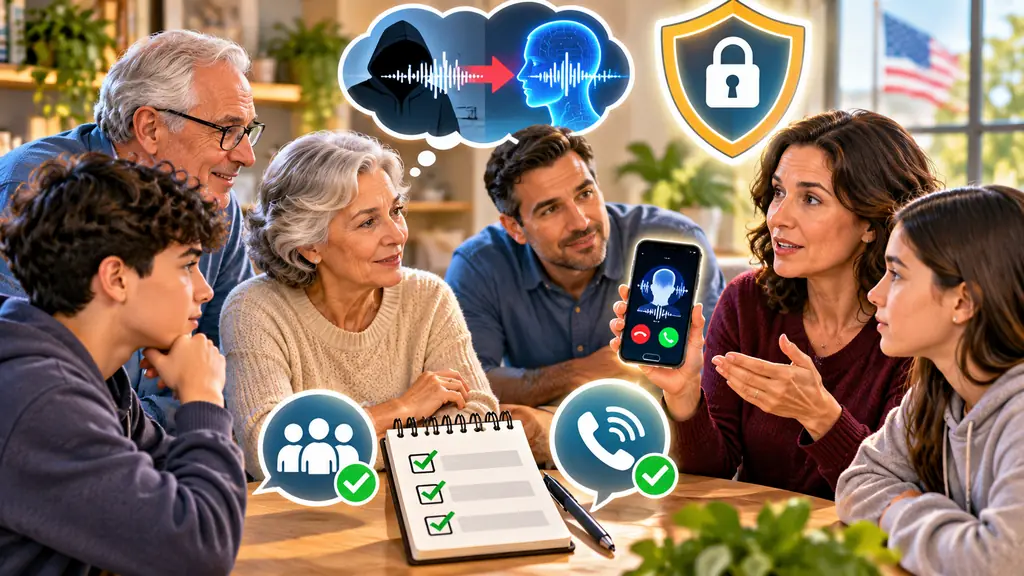
AI Voice Cloning Scams: How Criminals Can Imitate Your Family
Imagine receiving a phone call from your son or daughter. Their voice sounds familiar, but they are crying and asking for urgent help. They say they have been in an accident, arrested, or are facing an emergency. They need money immediately.
You recognize the voice. You hear the fear. You want to help.
But what if the person speaking is not your family member?
Criminals are increasingly using artificial intelligence (AI) voice-cloning technology to imitate real people. They can use a recording of someone's voice to create audio that sounds remarkably similar to the original person. Then they use that fake voice to convince family members to send money or reveal sensitive information.
This type of fraud is often called an AI voice cloning scam, family emergency scam, or grandparent scam.
The Federal Trade Commission (FTC) has warned consumers that scammers can use AI-generated voices to make fake emergency stories more believable.
Here's how these scams work and how you can protect yourself and your family.
1. What Is an AI Voice Cloning Scam?
AI voice cloning is technology that uses artificial intelligence to reproduce someone's voice. It can imitate characteristics such as tone, speaking style, and pronunciation.
Scammers may obtain audio recordings from publicly available videos, social media posts, interviews, or other online content. They can then use voice-cloning software to generate audio that sounds like the person.
For example, a criminal might find a video of your daughter speaking online, create a voice imitation, and call you pretending to be her.
The caller might say:
-
"Mom, I've been in an accident. Please help me."
-
"Dad, I'm in trouble and need money for a lawyer."
-
"Grandma, I've been arrested. Please don't tell anyone."
-
"I lost my phone. I'm calling from someone else's number."
The voice may sound convincing, but that does not prove the call is genuine.
The FTC explains that scammers can use a short audio recording of a loved one to create a voice imitation and make fraudulent emergency calls.
2. How Do Criminals Use AI to Clone Someone's Voice?
The process can be surprisingly simple for criminals who have access to suitable audio and voice-cloning tools.
A typical scam may follow these steps:
Step 1: Find a voice recording
Scammers look for publicly available recordings on social media platforms, video-sharing websites, or other online sources.
Step 2: Create a voice imitation
They use AI software to generate audio that resembles the person's voice.
Step 3: Invent an emergency
They create a believable story involving an accident, arrest, medical emergency, kidnapping, or financial problem.
Step 4: Contact a family member
The scammer calls a parent, grandparent, spouse, or another relative and pretends to be the person whose voice was copied.
Step 5: Demand urgent payment
The caller pressures the victim to send money before they have time to verify the story.
The objective is to create panic and prevent the victim from checking whether the emergency is real.
3. Common AI Voice Cloning Scam Scenarios
Scammers use different stories depending on whom they are targeting. Here are some common examples.
The fake accident emergency
You receive a call that sounds like your son or daughter.
They claim they have been involved in a serious accident and urgently need money for medical expenses, transportation, or legal assistance.
Sometimes another person takes over the call, pretending to be a police officer, doctor, or lawyer.
The fake arrest or bail request
The caller sounds like your grandson or granddaughter and claims they have been arrested.
A second person may pretend to be an attorney or court official and demand money for bail or legal fees.
They may instruct you not to contact other family members.
The fake kidnapping call
A caller claims that your family member has been kidnapped or is being held somewhere.
They may use a cloned voice to make the situation sound real and demand an immediate payment.
The fake medical emergency
Someone pretending to be your relative claims they are in a hospital and need money for treatment, medication, or an emergency procedure.
The caller may use fear and urgency to stop you from asking questions.
The fake request from a family member
Not every scam involves an emergency. A criminal may simply imitate a relative and ask for money, banking details, passwords, or a verification code.
4. Warning Signs of an AI Voice Cloning Scam
A cloned voice may sound convincing, so do not depend on listening for strange pronunciation or robotic sounds.
Instead, pay attention to the caller's behavior and the request they are making.
Watch for these warning signs:
-
Unexpected emergency: Someone suddenly claims to be in serious trouble.
-
Immediate payment demand: The caller says money must be sent right away.
-
Unusual payment methods: They request gift cards, cryptocurrency, wire transfers, or other difficult-to-reverse payments.
-
Secrecy: They tell you not to contact parents, spouses, or other relatives.
-
A new phone number: The person claims their regular phone is unavailable.
-
Pressure and threats: They discourage you from ending the call or checking the story.
-
Sensitive information requests: They ask for passwords, banking details, or one-time verification codes.
Remember: A familiar voice is not proof of identity.
5. How to Protect Your Family From Voice Cloning Scams
The best protection is to establish a family verification routine before an emergency happens.
Create a family safe word
Agree on a private word or phrase that only trusted family members know.
If someone calls claiming to be your son, daughter, or grandchild and asks for emergency assistance, ask for the agreed phrase.
Do not share the phrase publicly or send it in ordinary social media posts.
Hang up and call back
If you receive a suspicious emergency call, end it.
Call your family member using the phone number already saved in your contacts. Do not call a number provided by the suspicious caller.
If they do not answer, contact another trusted relative or friend who can verify their whereabouts.
Verify before sending money
Never send money simply because a caller sounds familiar.
Contact other family members, confirm the situation independently, and speak directly with the person involved whenever possible.
Establish a family emergency plan
Discuss what family members should do if they genuinely need urgent financial help.
For example, agree that no one will request emergency payments through an unexpected phone call without independent verification.
Limit publicly available voice recordings
Review your social media privacy settings.
Think carefully before posting public videos containing clear recordings of your voice, especially when they reveal personal or family information.
You do not need to stop using social media. Just be thoughtful about what you make publicly available.
Protect personal and financial information
Never share your bank password, PIN, Social Security number, or one-time verification code with an unexpected caller.
A genuine family emergency does not require you to disclose your account credentials.
6. What Should You Do If You Receive a Suspicious Call?
If someone calls claiming to be a family member and asks for urgent help, follow these steps:
-
Stay calm. Do not make an immediate payment.
-
End the call if the request feels suspicious.
-
Call the real family member using a number you already know.
-
Contact another relative or trusted person to confirm the story.
-
Do not send gift cards, cryptocurrency, or wire transfers based on the caller's instructions.
-
Save the phone number, messages, payment details, and other evidence.
-
Report the incident to the appropriate authorities.
If the caller claims there is an immediate threat to someone's safety, contact local law enforcement or emergency services through an independently verified number.
7. What If You Already Sent Money to a Scammer?
If you believe you have been tricked by an AI voice cloning scam, act quickly. You may still be able to limit the financial damage.
Contact your bank or payment provider immediately.
Explain that you may have been the victim of fraud and ask whether the transaction can be stopped, reversed, or disputed.
Depending on how you paid:
-
Bank transfer or wire transfer: Contact your bank immediately and request a recall or reversal.
-
Credit or debit card: Contact the card issuer, report the fraudulent transaction, and ask about disputing the charge.
-
Gift cards: Contact the gift card company and ask whether the remaining balance can be frozen.
-
Cryptocurrency: Contact the exchange or wallet provider you used and report the transaction. Cryptocurrency transfers are generally difficult to reverse.
Also take these steps:
-
Change passwords if you shared account credentials.
-
Secure your email and financial accounts.
-
Enable multifactor authentication where available.
-
Report the incident to the FTC at ReportFraud.ftc.gov.
-
If you believe your identity information was stolen, visit IdentityTheft.gov.
Do not pay anyone who promises to recover your stolen money for an upfront fee. Recovery scams often target people who have already lost money.
8. Can AI Voice Cloning Scams Be Reported in the United States?
Yes. If you receive a suspicious AI-generated call or lose money to a voice impersonation scam, you can report it.
Here are useful official resources:
-
Federal Trade Commission (FTC): ReportFraud.ftc.gov — Report fraud, impersonation, and suspicious business practices.
-
Federal Communications Commission (FCC): FCC Consumer Complaints — Submit complaints involving unwanted calls and communications.
-
FBI Internet Crime Complaint Center (IC3): ic3.gov — Report internet-related crimes and online financial fraud.
-
IdentityTheft.gov: identitytheft.gov — Get guidance if your personal information has been misused.
The FCC has also clarified that AI-generated voices fall under restrictions on artificial or prerecorded voices in certain robocalls under the Telephone Consumer Protection Act. This does not mean every individual AI-generated phone conversation is automatically covered by the same rules, but it gives authorities additional tools against unlawful robocalls.
9. Frequently Asked Questions
Can AI really copy someone's voice?
Yes. AI voice-cloning technology can generate audio that resembles a real person's voice using existing recordings. Scammers may use publicly available audio to create convincing imitations.
How much audio does a scammer need to clone a voice?
The amount depends on the technology, recording quality, and circumstances. A short recording may be enough for some tools, so do not assume that only long videos create a risk.
Can you recognize an AI-cloned voice by listening?
Not reliably. Some generated voices may have unusual pauses or sound unnatural, but others can be convincing. Independent verification is much safer than trying to detect a fake voice by ear.
Should I answer calls from unknown numbers?
You do not have to answer every unfamiliar number. You can let the call go to voicemail and verify the caller independently if they claim to be someone you know.
What is the safest way to verify an emergency call?
Hang up and call the family member using a number already saved in your contacts. If they cannot be reached, contact another trusted relative or friend.
Can scammers clone voices from Facebook, Instagram, or YouTube?
Publicly available videos and audio recordings can provide material for voice cloning. Review your privacy settings and be thoughtful about the personal recordings you share publicly.
Are older adults more vulnerable to these scams?
Anyone can be targeted, but criminals often use family emergency stories to exploit fear and concern, particularly when contacting parents and grandparents. Families should discuss these scams with relatives of all ages.
Final Thoughts
AI voice cloning has made family impersonation scams more convincing, but you do not need advanced technology to protect yourself.
Remember three simple rules:
-
Never trust a voice alone.
-
Always verify an emergency through a known phone number.
-
Never send money under pressure.
Talk about family safe words and emergency verification plans before a suspicious call happens. A few minutes of preparation could prevent a devastating financial loss.
Share this information with your parents, grandparents, children, and friends. Awareness is one of the strongest defenses against AI-powered scams.
 The BriefWire